Why doesn't this guide name businesses at specific addresses?
Independent operators move, expand, and close faster than any editorial page can track. We describe the block's era, built form, and use pattern, which stays accurate.
23 February 2026 · Streets · 3 min read
Why the corridor feels urban at a scale most of Charlotte lost, and what that means for its future.
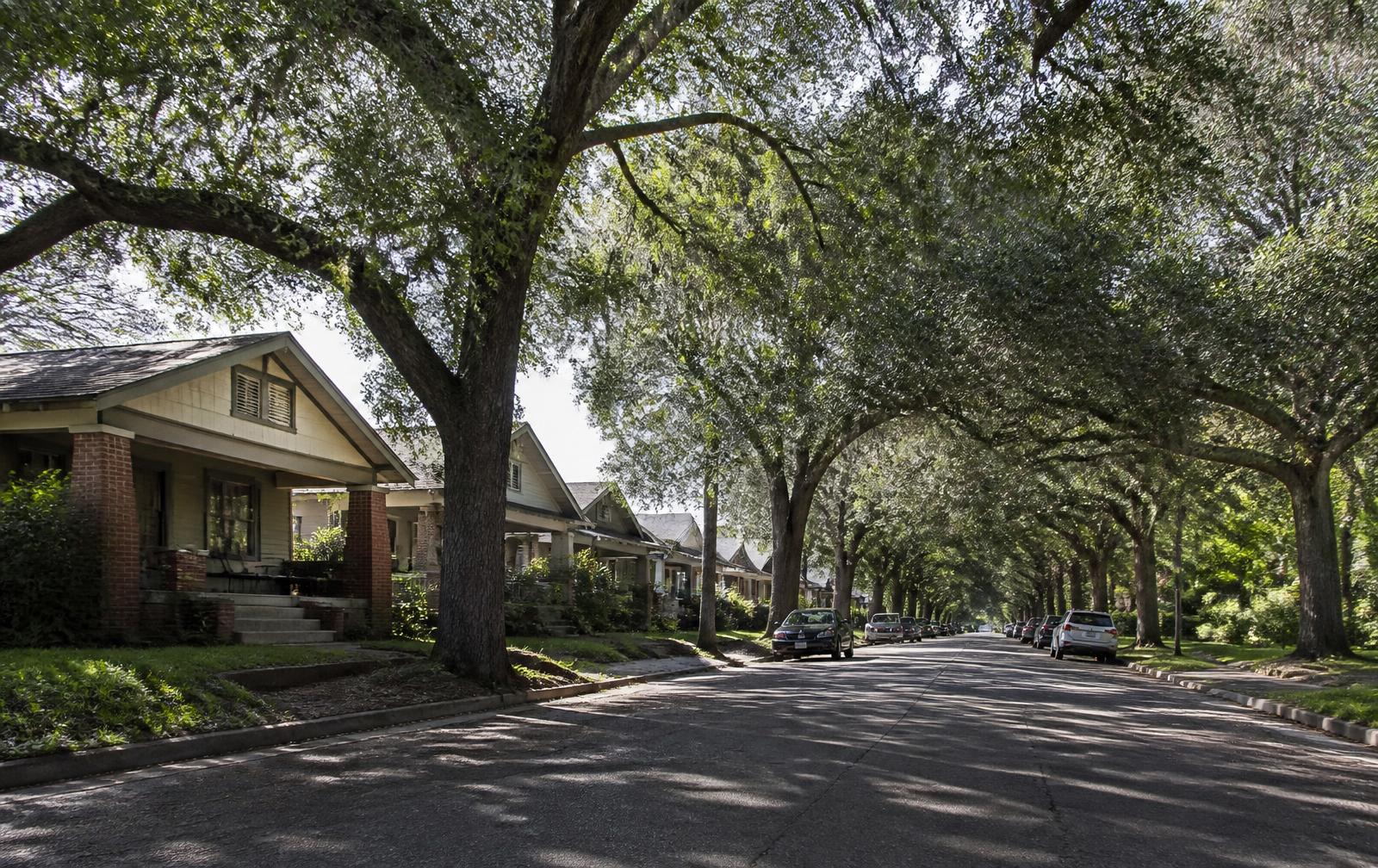
With the canopy down, Plaza Midwood shows its structure. Rooflines, additions, and the real condition of a block are all visible in a way they simply are not in July, which makes the cold months the most informative time of year to look closely at this neighborhood. This week's entry is about a piece of the neighborhood's physical structure. Why the corridor feels urban at a scale most of Charlotte lost, and what that means for its future. Published 23 February 2026 as part of this guide's weekly record of Plaza Midwood, Charlotte, North Carolina.
The reason Central Avenue reads as a main street is structural: the buildings sit at the property line, parking is behind or on-street, storefront bays are shallow and frequent, and party walls make the block read as one continuous wall rather than a row of freestanding boxes. Change any one of those and the street stops working the way it does. That form is a survivor from before the parking-forward era, and it cannot easily be rebuilt.
The physical depth of the storefronts limits what can be tenanted without significant structural work, which is part of why the corridor has historically filled with independent, owner-operated businesses rather than national formats. That is an economic consequence of geometry, not a matter of taste — and it is worth understanding for anyone trying to predict what comes next.
The deep parcels with surface parking on the eastern half of the corridor are the sites with real physical capacity to redevelop. Anyone trying to anticipate the neighborhood's next decade should watch rezoning activity there rather than in the district core, where shallow lots and party-wall construction make wholesale change expensive. Petitions and hearing schedules are published by the City of Charlotte.
Everything above describes durable conditions — built form, street pattern, process, and where the public record lives — rather than prices, tenants, or anything else that changes month to month. Parcel-specific facts should be confirmed with the Mecklenburg County Assessor, land-use and permit questions with the City of Charlotte, school assignment with Charlotte-Mecklenburg Schools, and historic designation with the Charlotte Historic District Commission. This entry was published 23 February 2026; a new one publishes every week. Filed under streets.
Subjects
This is the 23 February 2026 edition of an evergreen article. Read the original article.
From the library · Streets
The archive
Frequently asked
Independent operators move, expand, and close faster than any editorial page can track. We describe the block's era, built form, and use pattern, which stays accurate.
No. Central Avenue runs well east and west of the neighborhood; the Plaza Midwood stretch is roughly the continuous storefront run and the parcels immediately around it.
Sources & verification
Figures and descriptions on this page are compiled from the public sources listed above and reviewed periodically. Conditions change; verify anything you plan to rely on with the responsible authority before acting.
Publisher-associated businesses
These businesses are associated with this guide's publisher, Nicholas and Miriam Peters — not independent recommendations. The full list is in the Business Services menu.
Custom builder & renovator
Infill construction, whole-house renovation, and additions on Charlotte's historic in-town lots.
Real estate advisory
Buyer and seller representation across Plaza Midwood, Charlotte, and the Carolinas.
Interior design
Interior architecture and furnishings for historic and newly built Charlotte homes.
Smart home & AV integration
Networking, lighting control, media, and security systems designed for older houses.
Related
The commercial spine: what is on it, how it developed, and living near it.
Block-level guides to Central Avenue, The Plaza, Commonwealth, Pecan, and Thomas Avenue address ranges.
Vintage, records, books, plants, and independent retail.
Dive bars, cocktail rooms, breweries, and live music.