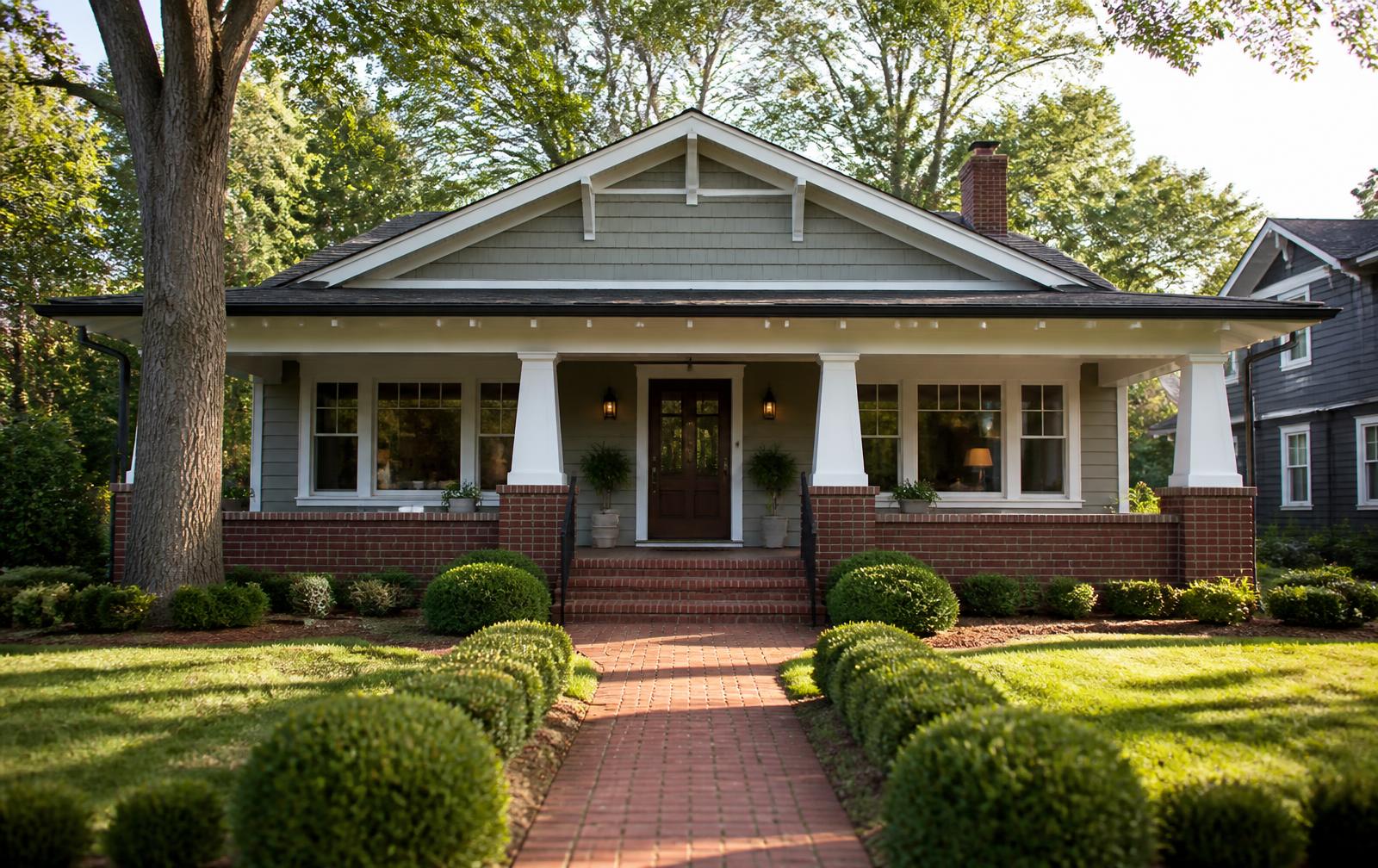
The four price bands
In practice the neighborhood trades in four tiers. Unrenovated original bungalows and mill houses form the entry band and sell largely on lot and block. Cosmetically updated houses — new kitchen, old systems — sit just above and are the most commonly mispriced group in the neighborhood. Fully renovated period houses with corrected structure, new mechanicals, and a real addition form the third band. New infill and gut-to-studs custom houses sit at the top, competing less with the block than with Dilworth and Elizabeth.
What actually drives price
Distance from Central Avenue is the single strongest variable, and it cuts both directions: within a two-block walk of the corridor you pay a walkability premium and accept Friday-night noise; four blocks out you trade some convenience for quiet and canopy. After that, in rough order: quality of the structural and systems work, whether the addition reads as original from the street, off-street parking, lot width, and park frontage. Finish level matters, but far less than buyers expect relative to the bones.
Inventory and timing
This is a low-turnover neighborhood. Many owners are long-tenured, and the historic blocks in particular produce few sales in a given year. That thinness makes seasonal patterns sharper than city-wide statistics suggest: spring produces the most listings and the most competition, late summer is the softest window for buyers, and a well-prepared house listed in a quiet month can outperform the same house in a crowded April.
How to use this guide
Start with the communities directory to understand which enclave you are actually shopping, then read the street-level notes for the specific blocks on your list. If you are weighing a renovation project, price the systems before the finishes. If you are comparing Plaza Midwood against NoDa, Elizabeth, or Dilworth, the comparison page sets out the trade-offs in plain terms.