Design

Interior Design for Historic Homes

The design problem in a Plaza Midwood house is not decoration. It is reconciling how people live now with rooms proportioned for 1926 — and doing it without turning the house into either a museum or a showroom.

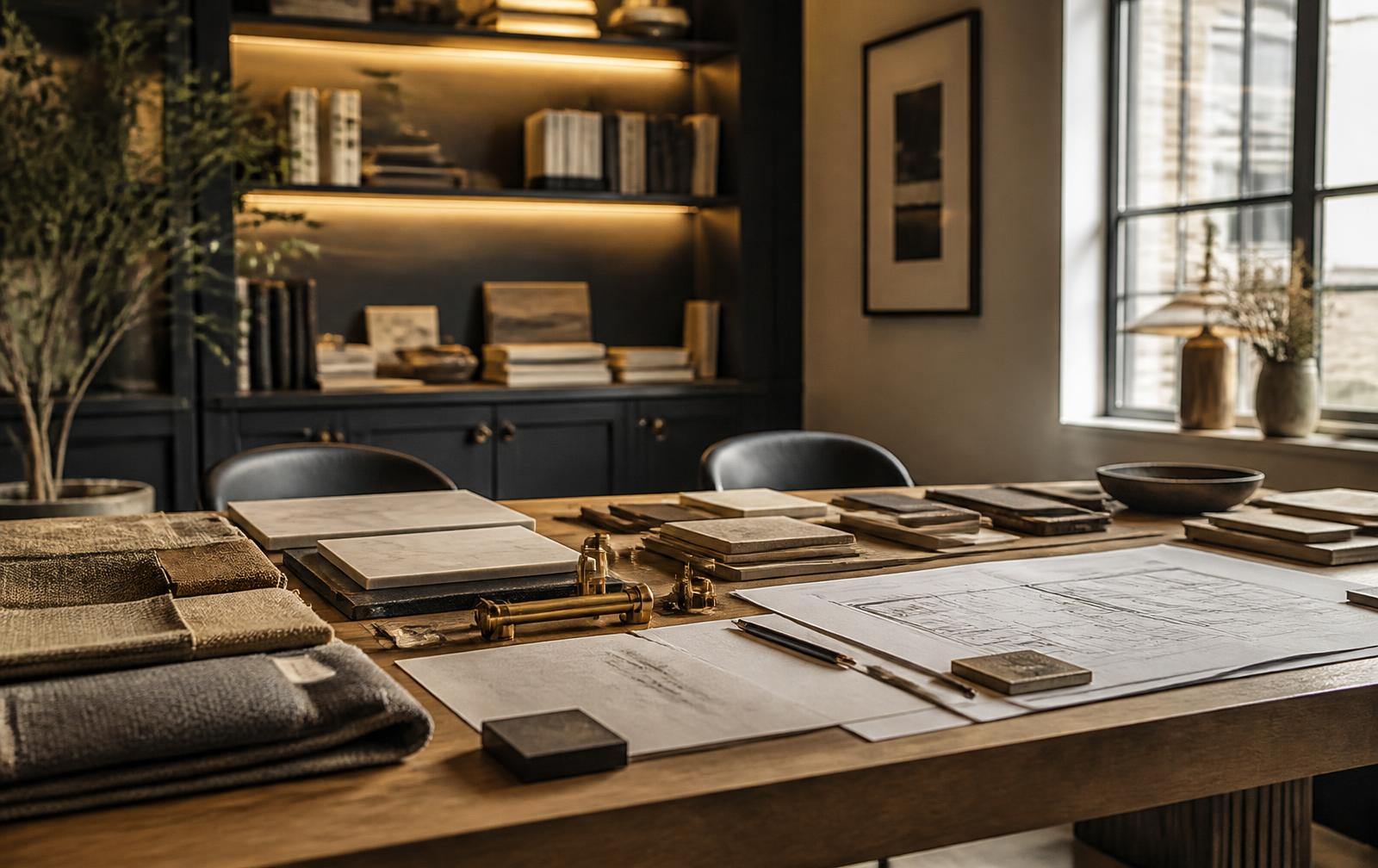
Interior design studio table with material samples and drawings
Selections and specification work.

Match the millwork, then move on

Trim profile, baseboard height, casing width, and door style are what make new work read as original. Get them right and a fully modern kitchen still belongs to the house. Get them wrong and no finish budget will fix the discord. Salvage the original profiles where they exist and mill to match where they do not.

Kitchens and baths in old plans

Original kitchens were small back-of-house rooms and original baths were afterthoughts. The workable answer is usually reorganizing the rear of the plan rather than expanding the footprint — moving the kitchen into a former porch or rear room, borrowing from an oversized hall, and keeping cabinetry heights and lighting scaled to the ceiling you actually have.

Palette, light, and furnishing scale

These houses take saturated color better than white boxes do; deep greens, clay, and warm neutrals read correctly under the light that comes through porch-shaded windows. Layer lighting, since most rooms have no ceiling boxes originally. Furnish to the room's real dimensions — one properly scaled sofa rather than a sectional that eats a 12-by-14 living room.

Millwork profiles, tile, and lighting decisions are easier to judge from photographs than from description, and the interior work documented by Emerald & Oak Design illustrates the balance between period detail and modern use discussed above.

Frequently asked

Questions & answers

Should I restore or modernize a historic home interior?

Most owners do both: preserving original millwork, floors, and room proportions while modernizing kitchens, baths, and systems. Professional practice standards for interior designers are published by the American Society of Interior Designers.

Source: American Society of Interior Designers

Do interior changes require historic review?

No. Historic district review in Charlotte applies to exterior changes visible from the public right of way, not interiors, as described by the Charlotte Historic District Commission.

Source: Charlotte Historic District Commission

How do you add storage to a bungalow?

Built-ins in existing wall depth, reworked rear plans, and dormer or attic conversions are typical strategies; any structural change requires permits through Mecklenburg County Code Enforcement.

Source: Charlotte / Mecklenburg County Code Enforcement permitting

Sources & verification

Figures and descriptions on this page are compiled from the public sources listed above and reviewed periodically. Conditions change; verify anything you plan to rely on with the responsible authority before acting.