Technology

Smart Home & AV Integration

Technology in a hundred-year-old house is a wiring problem before it is a product problem. Plaster, dense old-growth framing, brick chimneys, and no useful chase anywhere are the actual design constraints.

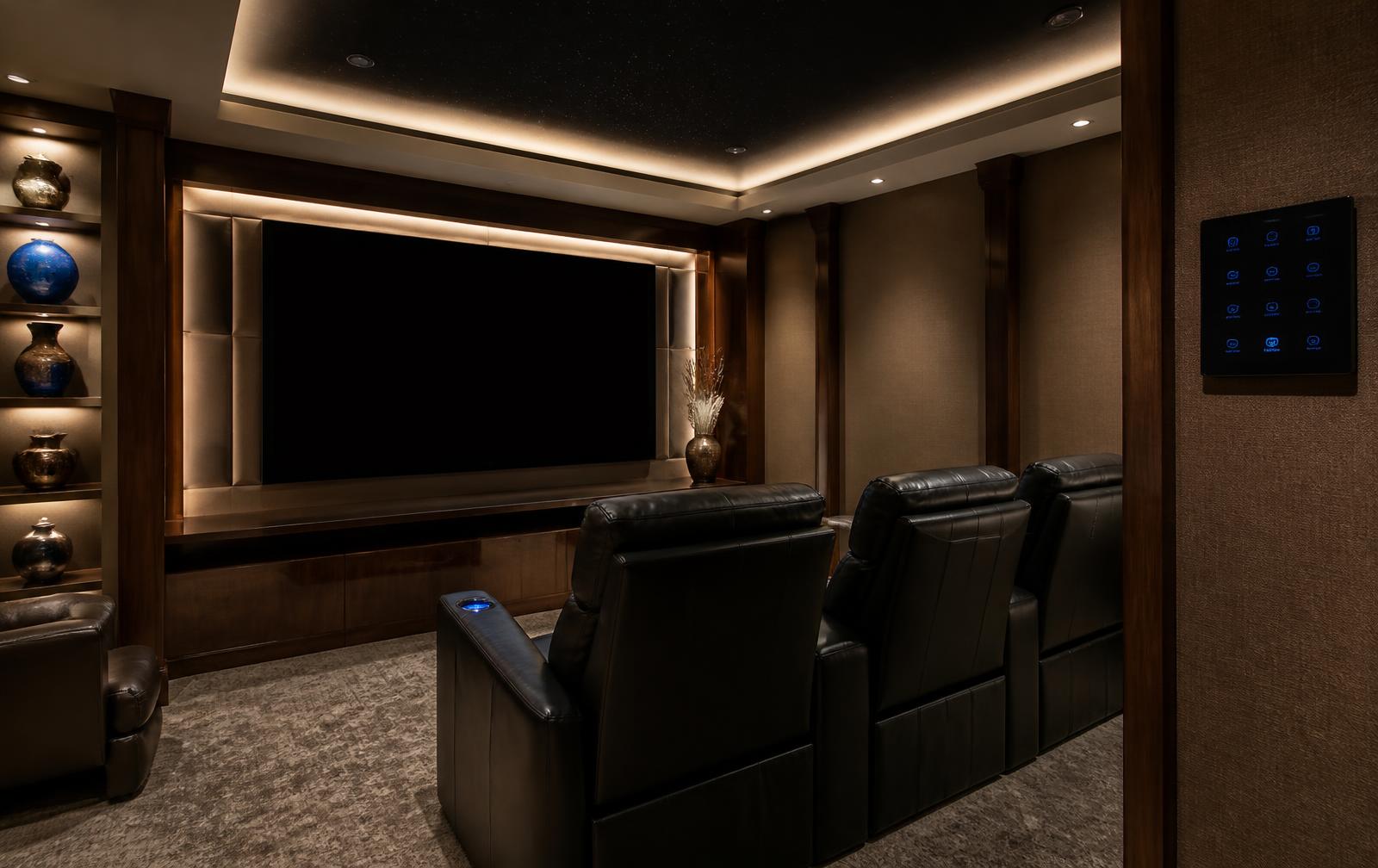
Integrated media room with in-wall speakers and a wall control keypad
Integrated audio, video, lighting, and control.

Network first, everything else second

Wireless coverage fails in these houses for physical reasons: lath with metal mesh, masonry cores, and multiple additions. The reliable answer is hardwired access points on a structured cable backbone, placed during any renovation when walls are open. Every other system — cameras, streaming, control, thermostats — inherits the quality of that decision.

Lighting control that respects the house

Original rooms often have no ceiling boxes and switch locations that make no modern sense. Controlled lighting solves both without adding visual clutter, and modern keypads can sit behind period-appropriate plates. Scene control matters more here than in new construction because the rooms rely on layered lamps and sconces rather than recessed cans.

Audio, media, and security

Discreet in-ceiling and outdoor audio suits porches and patios, which is where these houses are actually used. Media rooms usually land in a rear addition or basement-adjacent space rather than a historic front room. Camera and access systems require thought about masonry penetrations and power runs. Peters Audio Video handles this category throughout the neighborhood.

Retrofitting networking, lighting control, and distributed audio through plaster and masonry is a specialist discipline; the systems documentation from Peters Audio Video covers the equipment and wiring decisions summarized here in more depth.

Frequently asked

Questions & answers

Can you wire a historic home for smart technology?

Yes — structured wiring is routinely retrofitted, ideally during renovation while walls are open, using existing chases, closets, and attic or crawl-space runs. Integration practice standards are maintained by CEDIA.

Source: CEDIA — integrated home technology standards

Why is Wi-Fi bad in old houses?

Plaster over wood or metal lath, masonry chimneys, and dense old-growth framing attenuate wireless signal far more than modern drywall, which is why hardwired access points outperform mesh alone in these houses.

Source: CEDIA — integrated home technology standards

Sources & verification

Figures and descriptions on this page are compiled from the public sources listed above and reviewed periodically. Conditions change; verify anything you plan to rely on with the responsible authority before acting.