Directory

Communities & Buildings

Plaza Midwood is not one neighborhood but a stack of plats, subdivisions, and later infill developments that grew into each other. Knowing which one you are standing in explains almost everything about the houses around you.

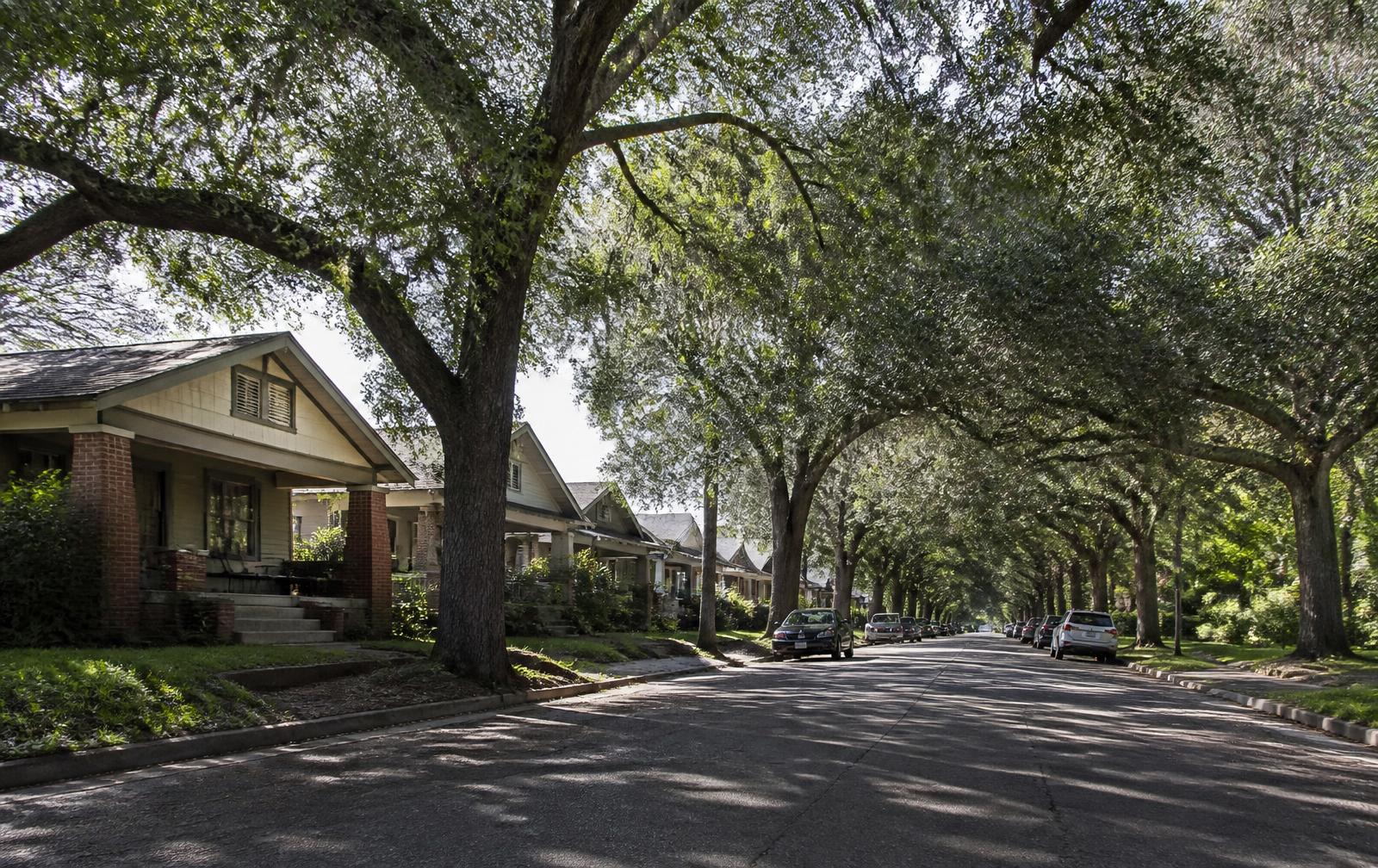
Tree-lined block of 1920s Craftsman bungalows in Plaza Midwood, Charlotte
Representative streetscape — deep porches, brick piers, and a continuous hardwood canopy.

How the pieces fit together

Midwood proper is the original streetcar plat north of Central Avenue and the core of the local historic district. Chantilly sits south, buffered by Briar Creek. Commonwealth Park runs east and reads later and looser. Around these sit condominium buildings from the 1960s onward, townhome rows from the 2000s boom, and a steady trickle of small infill communities on assembled lots.

Reading a community listing

Each entry below covers the era it was built, the dominant housing types, the character of its streets, and what buyers typically weigh when choosing it over a neighbor. Descriptions are editorial and general; they describe places, not individual properties, and no property listings appear anywhere on this site.

28 communities

Every enclave, building, and community

Historic enclave

Midwood

The original streetcar plat north of Central Avenue and the core of the local historic district.

1910s–1930s · Mid to upper in-town band

Historic enclave

Chantilly

A quieter early-20th-century plat south of Independence, buffered by Briar Creek and the greenway.

1913–1940s · Mid in-town band

Historic enclave

Commonwealth Park

The eastern shoulder of the neighborhood, built out over three decades around Commonwealth Avenue.

1920s–1950s · Mid in-town band

Historic enclave

Oakhurst

A post-war neighborhood southeast of Plaza Midwood that has absorbed much of its overflow demand.

1940s–1960s · Entry to mid in-town band

Historic enclave

Belmont

A former mill village west of Plaza Midwood, now one of Charlotte's most rapidly rebuilt districts.

1900s–1930s, heavily rebuilt · Wide range, entry to upper

Historic enclave

Plaza Shamrock

North of Plaza Midwood along The Plaza, a mixed-era district anchored by Shamrock Drive.

1920s–1950s · Entry to mid in-town band

Condominium

Sedgefield Place Condominiums

A brick garden-style condominium building steps from Central Avenue dining.

1960s brick, renovated interiors · Attached entry band

Condominium

Central Avenue Lofts

Converted commercial space on the Central Avenue spine with exposed structure and tall windows.

2000s conversion · Attached mid band

Townhome community

Pecan Point Townhomes

A modern townhome row on a former commercial parcel near Pecan Avenue.

2010s · Attached mid band

Townhome community

Commonwealth Row

Contemporary townhomes on the Commonwealth Avenue side of the neighborhood.

2010s–2020s · Attached mid band

Apartment landmark

Thomas Street Flats

A larger rental building that reshaped the density conversation on the neighborhood's western edge.

2010s · Rental

Historic enclave

Midwood Bungalow Court

A rare surviving bungalow court arranged around a shared central walk.

1920s · Attached entry band

Infill community

Briar Creek Crossing

A small pocket of new detached houses built on assembled parcels near the greenway.

2020s · Upper in-town band

Historic enclave

Veterans Park District

The blocks immediately surrounding Veterans Park and its recreation center.

1920s–1940s · Mid to upper in-town band

Mixed-use

The Plaza Corridor

The boulevard that gives the neighborhood half its name, lined with houses, churches, and small commercial nodes.

1910s to present · Wide range

Mixed-use

Central Avenue Business District

The dining, retail, and nightlife spine that made Plaza Midwood a citywide destination.

1920s to present · Commercial

Historic enclave

Winterfield

A post-war district east of Commonwealth Park, one of the most affordable footholds near the neighborhood.

1950s–1960s · Entry in-town band

Historic enclave

Elizabeth

Charlotte's second-oldest streetcar suburb, immediately southwest of Plaza Midwood.

1900s–1930s · Upper in-town band

Historic enclave

NoDa

The arts district north of Plaza Midwood, connected by The Plaza and the Blue Line.

1900s mill village, redeveloped · Mid to upper in-town band

Historic enclave

Villa Heights

Between Plaza Midwood, NoDa, and Optimist Park, one of the fastest-changing grids in the city.

1910s–1940s · Mid in-town band

Historic enclave

Sheffield Park

A compact post-war pocket north of Commonwealth with unusually deep lots.

1950s · Entry in-town band

Historic enclave

Morningside

A small transitional pocket between Commonwealth Park and the Midwood core.

1930s–1950s · Mid in-town band

Historic enclave

Thomas Avenue District

One of the most photographed residential streets in Charlotte and the blocks around it.

1910s–1930s · Upper in-town band

Historic enclave

Clement Avenue District

A tight residential grid running parallel to the commercial spine.

1920s · Mid to upper in-town band

Historic enclave

Hamorton Place

A short, curving street of larger period houses at the neighborhood's quiet interior.

1920s–1930s · Upper in-town band

Historic enclave

Kilborne Park

The blocks along Kilborne Drive between Veterans Park and Eastway.

1940s–1950s · Mid in-town band

Infill community

Pierce Street Cottages

A cottage-court infill project modeled on the neighborhood's 1920s precedent.

2020s · Attached mid band

Mixed-use

The Mercantile

A mixed-use building combining condominium residences with ground-floor storefronts.

2020s · Attached mid to upper band

Frequently asked

Questions & answers

What neighborhoods make up Plaza Midwood?

The area is usually described as Midwood, Chantilly, Commonwealth Park, and the Central Avenue and Plaza corridors, with Oakhurst, Winterfield, and Belmont bordering it. Official neighborhood boundaries and statistical areas are published by the City of Charlotte.

Source: Mecklenburg County POLARIS 3G parcel viewer

Are there condos in Plaza Midwood?

Yes — a mix of 1960s and 1970s brick walk-up buildings, converted properties, and newer mid-rise and townhome developments along the corridors. Ownership form and association details for a specific building can be confirmed through the Mecklenburg County Assessor's records.

Source: Mecklenburg County POLARIS 3G parcel viewer

Does Plaza Midwood have an HOA?

The historic single-family blocks generally do not have mandatory homeowner associations, though condominium and townhome communities do. Neighborhood associations in the area are voluntary civic organizations, listed through Charlotte Housing & Neighborhood Services.

Source: CEDIA — integrated home technology standards

Sources & verification

Figures and descriptions on this page are compiled from the public sources listed above and reviewed periodically. Conditions change; verify anything you plan to rely on with the responsible authority before acting.