Is The Plaza part of Plaza Midwood?
Yes — The Plaza is one of the two lines that organize the neighborhood, alongside Central Avenue. It continues north past the neighborhood boundary, so not every address on The Plaza is in Plaza Midwood.
2 February 2026 · Streets · 3 min read
Median, setback, and lot depth — why the neighborhood's grandest street looks the way it does.
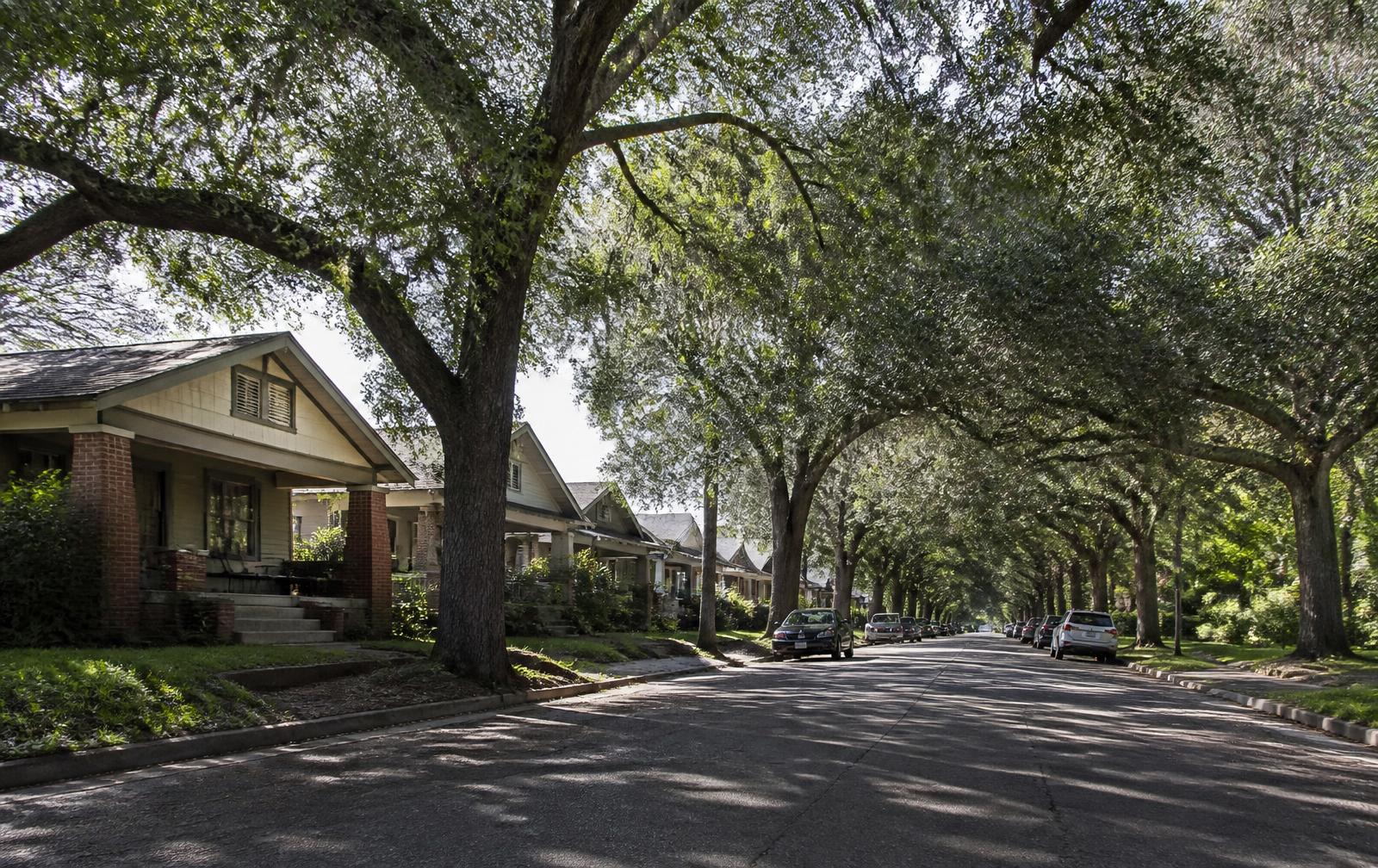
With the canopy down, Plaza Midwood shows its structure. Rooflines, additions, and the real condition of a block are all visible in a way they simply are not in July, which makes the cold months the most informative time of year to look closely at this neighborhood. This week's entry is about a piece of the neighborhood's physical structure. Median, setback, and lot depth — why the neighborhood's grandest street looks the way it does. Published 2 February 2026 as part of this guide's weekly record of Plaza Midwood, Charlotte, North Carolina.
The Plaza was laid out as a residential boulevard: a planted median, generous right-of-way, deep front lawns, and the largest pre-war houses in the neighborhood set well back from the curb. That geometry was a marketing decision as much as a planning one, and it still works. The median slows the visual speed of the street, the setbacks give the houses room to be seen, and the canopy closes overhead in a way that few Charlotte streets manage.
Deeper lots along the boulevard create possibilities that the tighter grid does not: rear additions, detached structures, and genuine backyard space. They also carry more landscape to maintain and more impervious-surface math to consider on any addition. Buyers drawn to the street for its scale should price the grounds as part of the house, not as a bonus.
A wide street carries more traffic than an interior residential block, and the houses sit closer to it than the lawns suggest. The trade is a street that feels like an occasion to come home to. As with the commercial corridor, the honest test is time of day: visit at the evening peak, not only on a quiet Sunday.
Everything above describes durable conditions — built form, street pattern, process, and where the public record lives — rather than prices, tenants, or anything else that changes month to month. Parcel-specific facts should be confirmed with the Mecklenburg County Assessor, land-use and permit questions with the City of Charlotte, school assignment with Charlotte-Mecklenburg Schools, and historic designation with the Charlotte Historic District Commission. This entry was published 2 February 2026; a new one publishes every week. Filed under streets.
Subjects
This is the 2 February 2026 edition of an evergreen article. Read the original article.
From the library · Streets
The archive
Frequently asked
Yes — The Plaza is one of the two lines that organize the neighborhood, alongside Central Avenue. It continues north past the neighborhood boundary, so not every address on The Plaza is in Plaza Midwood.
The southern blocks nearest the business district consistently carry among the highest prices per square foot, along with the pre-war blocks closest to Central Avenue.
Sources & verification
Figures and descriptions on this page are compiled from the public sources listed above and reviewed periodically. Conditions change; verify anything you plan to rely on with the responsible authority before acting.
Publisher-associated businesses
These businesses are associated with this guide's publisher, Nicholas and Miriam Peters — not independent recommendations. The full list is in the Business Services menu.
Custom builder & renovator
Infill construction, whole-house renovation, and additions on Charlotte's historic in-town lots.
Real estate advisory
Buyer and seller representation across Plaza Midwood, Charlotte, and the Carolinas.
Interior design
Interior architecture and furnishings for historic and newly built Charlotte homes.
Smart home & AV integration
Networking, lighting control, media, and security systems designed for older houses.
Related
The residential boulevard, its houses, and its commercial nodes.
A street-level directory of the neighborhood's residential grid.
Price bands, inventory reality, and how the 28205 market actually trades.
Original fabric, recurring condition issues, and the designation question.