Who owns the street trees?
Trees in the public right-of-way are generally the City's responsibility, with rules governing pruning and removal. Trees on private property are the owner's, subject to ordinance requirements during development.
31 March 2025 · Outdoors · 3 min read
Charlotte's canopy is a measurable asset. In Plaza Midwood it is also the neighborhood's defining feature.
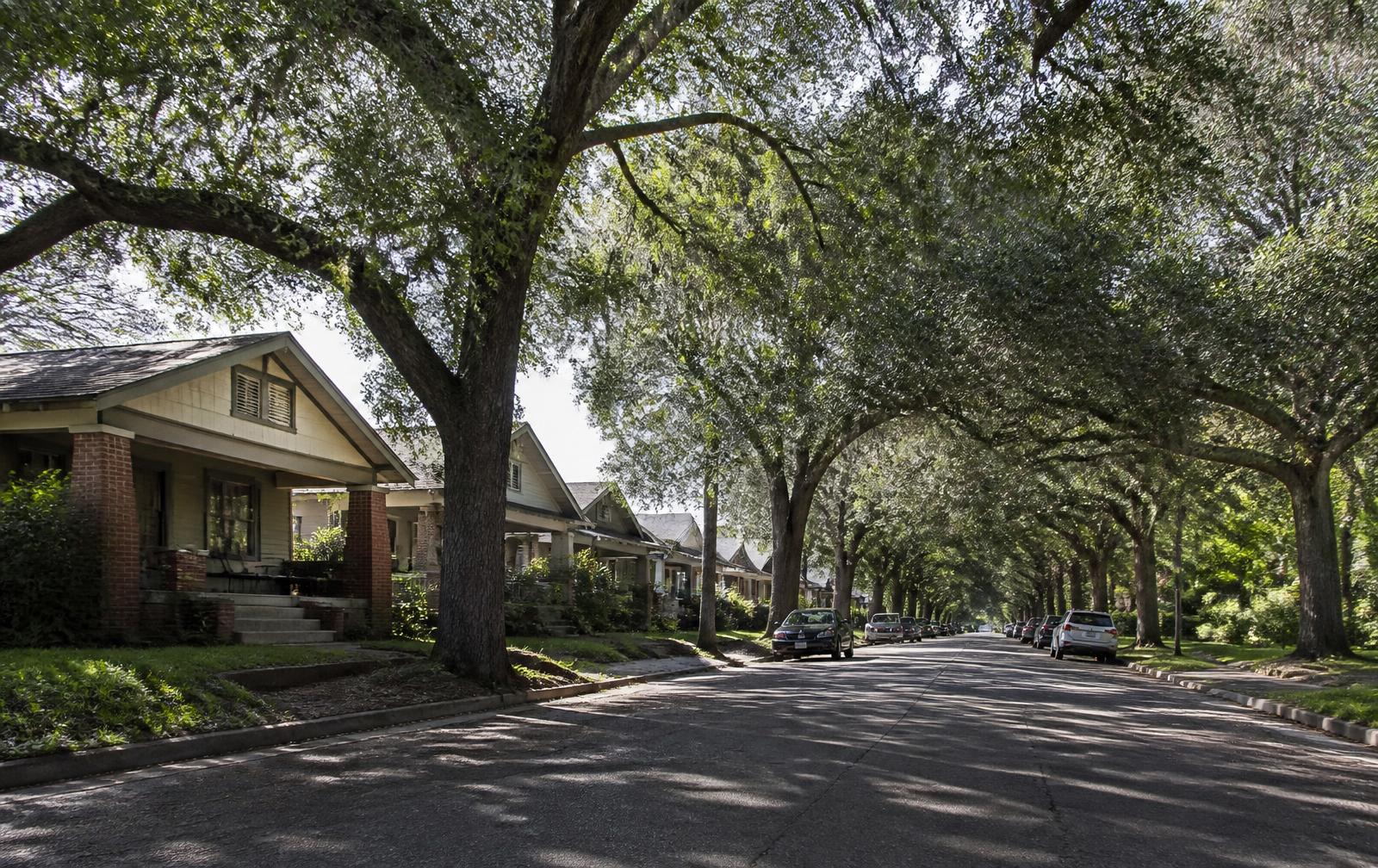
Spring is when Plaza Midwood is easiest to misjudge. The canopy fills in, the patios reopen, and every block looks like its best self — which is exactly why this is the season to be deliberate about what you are actually looking at. This week's entry is about the neighborhood's green infrastructure. Charlotte's canopy is a measurable asset. In Plaza Midwood it is also the neighborhood's defining feature. Published 31 March 2025 as part of this guide's weekly record of Plaza Midwood, Charlotte, North Carolina.
Mature street trees lower summer surface temperatures measurably, slow stormwater, absorb traffic noise, and shape how a street feels to walk. In a neighborhood where walkability is the core value proposition, the canopy is not landscaping — it is infrastructure. It is also the element residents most reliably name when asked why they chose the neighborhood over one with newer houses.
A canopy tree removed for storm damage, construction, or decline takes decades to replace functionally. That asymmetry is why tree protection during construction matters so much, and why the tree ordinance requirements attached to permits are worth understanding rather than treating as paperwork. Protecting the root zone during a project is cheaper than any mitigation after the fact.
Watering young trees through their first summers, avoiding grade changes and trenching inside the root zone, and pruning on a schedule rather than in emergencies are the three highest-return actions available to an individual owner. The City of Charlotte publishes guidance on street trees and permitted work within the right-of-way.
Everything above describes durable conditions — built form, street pattern, process, and where the public record lives — rather than prices, tenants, or anything else that changes month to month. Parcel-specific facts should be confirmed with the Mecklenburg County Assessor, land-use and permit questions with the City of Charlotte, school assignment with Charlotte-Mecklenburg Schools, and historic designation with the Charlotte Historic District Commission. This entry was published 31 March 2025; a new one publishes every week. Filed under outdoors.
Subjects
From the library · Outdoors
The archive
Frequently asked
Trees in the public right-of-way are generally the City's responsibility, with rules governing pruning and removal. Trees on private property are the owner's, subject to ordinance requirements during development.
It depends on the tree's location, size, and whether work is tied to development. Check current City of Charlotte tree ordinance requirements before removal.
Source: Charlotte / Mecklenburg County Code Enforcement permitting
Sources & verification
Figures and descriptions on this page are compiled from the public sources listed above and reviewed periodically. Conditions change; verify anything you plan to rely on with the responsible authority before acting.
Publisher-associated businesses
These businesses are associated with this guide's publisher, Nicholas and Miriam Peters — not independent recommendations. The full list is in the Business Services menu.
Custom builder & renovator
Infill construction, whole-house renovation, and additions on Charlotte's historic in-town lots.
Real estate advisory
Buyer and seller representation across Plaza Midwood, Charlotte, and the Carolinas.
Interior design
Interior architecture and furnishings for historic and newly built Charlotte homes.
Smart home & AV integration
Networking, lighting control, media, and security systems designed for older houses.
Related
Sidewalks, corridors, crossings, and what you can actually reach on foot.
Midwood Park, Veterans Park, and greenway access from the neighborhood.
A street-level directory of the neighborhood's residential grid.
Walkability, daily rhythm, dogs, porches, and neighbors.