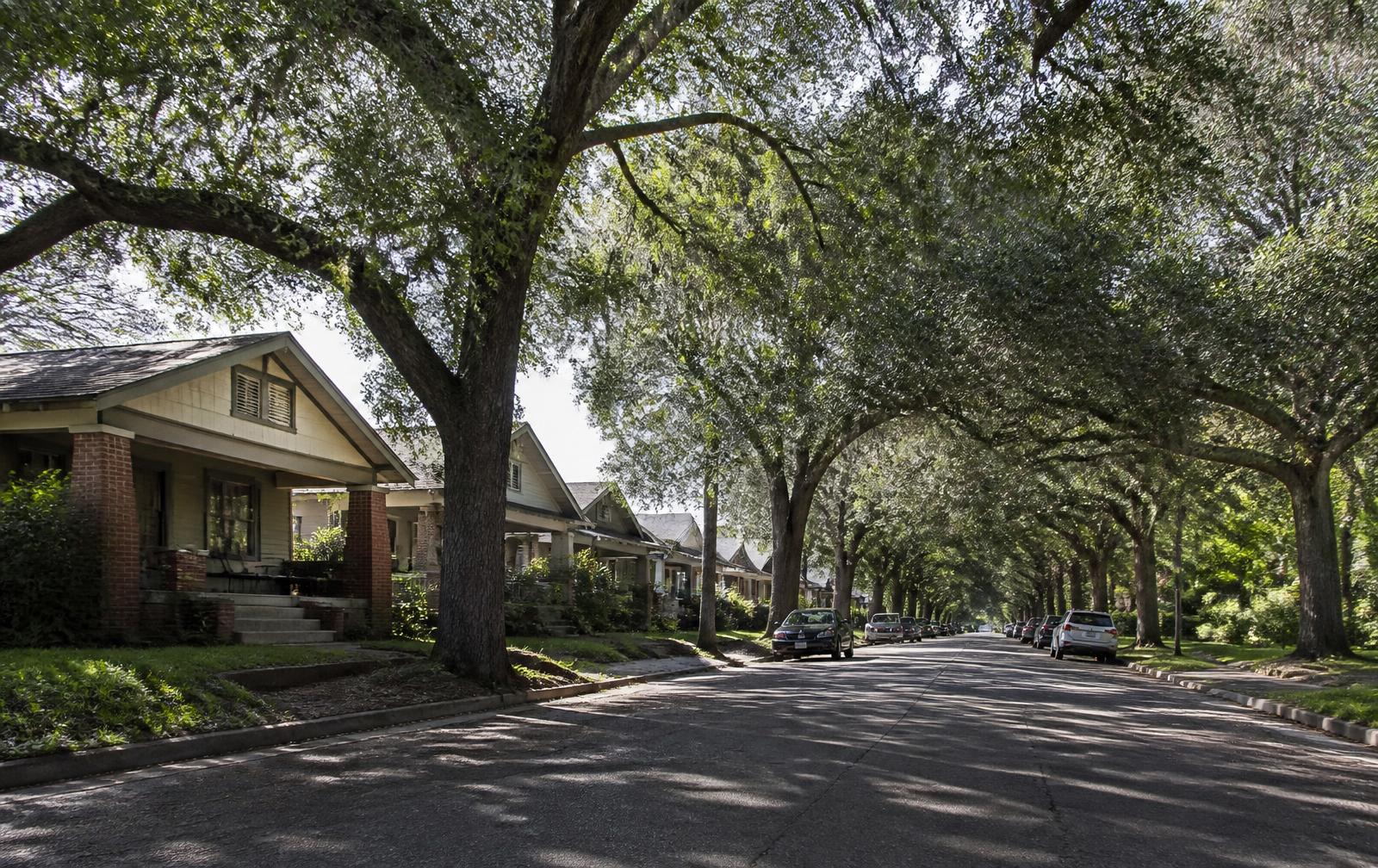
Walking Louise Avenue
A study in contrast: original mill cottages beside three-story contemporary infill.
Buyer and owner notes
The most visible example in the area of what unregulated redevelopment produces.
How this street prices
Value on Louise Avenue moves with condition, renovation depth, and position relative to the Central Avenue corridor rather than with square footage alone. Two houses of similar size on this street can differ substantially in price when one has corrected structure and systems and the other has only cosmetic updates.
What the era means for the house itself
Houses dated 1910–1935, heavy infill on Louise Avenue were framed before most modern code requirements existed. Expect original dimensional framing, plaster or early drywall, minimal wall insulation, undersized electrical service in unrenovated examples, and cast-iron or clay drain lines at the street connection. None of that is disqualifying — it is the normal baseline for the Belmont edge blocks — but it sets the sequence of work: structure and drainage first, then systems, then finishes.
Trees, setbacks, and what you can change
The canopy along Louise Avenue is part of the streetscape's value and is regulated: tree removal in the right-of-way and, in some cases, on private property is reviewed by the City of Charlotte's arborist. Front setbacks on this block are consistent by design, and additions that push the front plane forward are the least likely to survive review. Second-story and rear additions that leave the street facade legible are the pattern that gets approved in Belmont edge. Confirm zoning, overlay, and any historic-district designation for a specific address with the City of Charlotte before drawing plans.
Parking, traffic, and daily life
Louise Avenue is a residential street inside a district that draws city-wide evening traffic to Central Avenue and The Plaza. Spillover parking on weekend nights is the most common complaint on blocks nearest the corridor, and some streets carry residential permit restrictions administered by the Charlotte Department of Transportation. Sidewalk coverage is generally continuous on the older grid and intermittent on the eastern edges.